
Most commercial teams are working hard. They’re busy, they’re committed, and they’re expending huge amounts of energy.
I’ve spent 15 years working with companies across the travel and hospitality industry, and one thing has become very clear. Despite all that effort, many teams aren’t making the progress they should be.
Different businesses have different challenges, but they all come back to the same two questions:
- Do we have a clear direction?
- Do we have the skills to execute it?
I created the Commercial Velocity™ Map to help leaders answer those questions quickly and honestly. It gives leaders a practical framework to diagnose where they are, understand what’s holding them back and identify exactly what they need to focus on next.
Who’s it for then?
This framework is designed for founders, CEOs, C-suite leaders and heads of department, particularly in the travel and hotel tech space.
Whether you’re leading a startup entering the hotel industry or managing an established commercial team, the Commercial Velocity™ Map helps you honestly assess where you are today, so you know what to do next to keep people moving in the right direction, with the right skill set, to reach your dream destination.
It’s not about what you think you’ve put in place. It’s about how it’s actually playing out on the ground. Is your frontline team doing what you need them to do?
Why do I need it?
Without understanding your current position, it’s easy to mistake busy activity for progress.
Teams work incredibly hard but end up pulling in different directions. Leaders become frustrated because they believe the strategy is obvious, while everyone else seems confused. Strong commercial people continue doing what they’ve always done, even when the business needs something different.
The result is slower growth, inconsistent execution, missed opportunities and a team that never quite reaches its potential (and that sucks for everyone!).
Understanding where you sit on the Commercial Velocity™ Map gives you clarity on the next step rather than leaving success to chance.
How does it work?
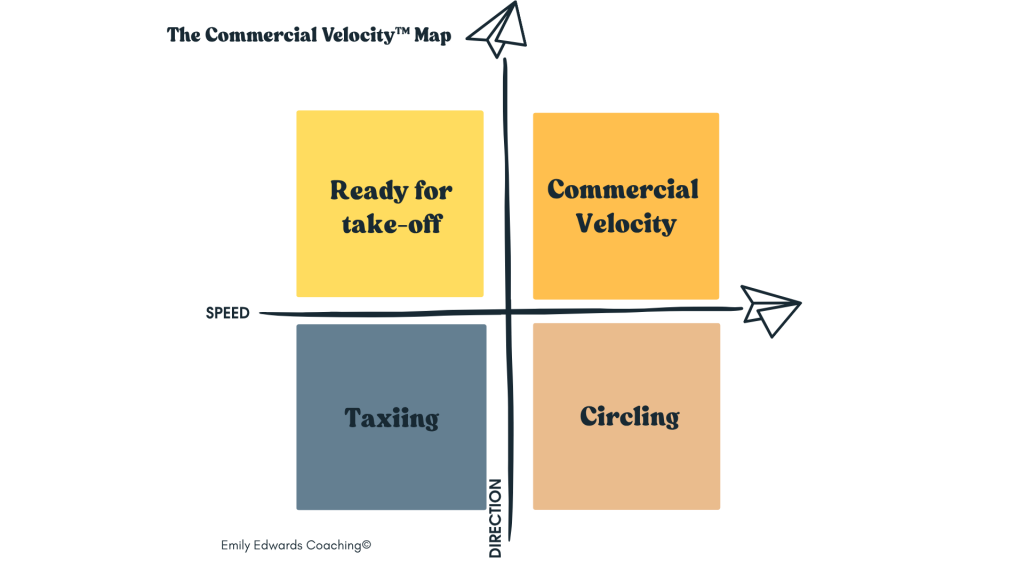
There are two key elements to creating Commercial Velocity™.
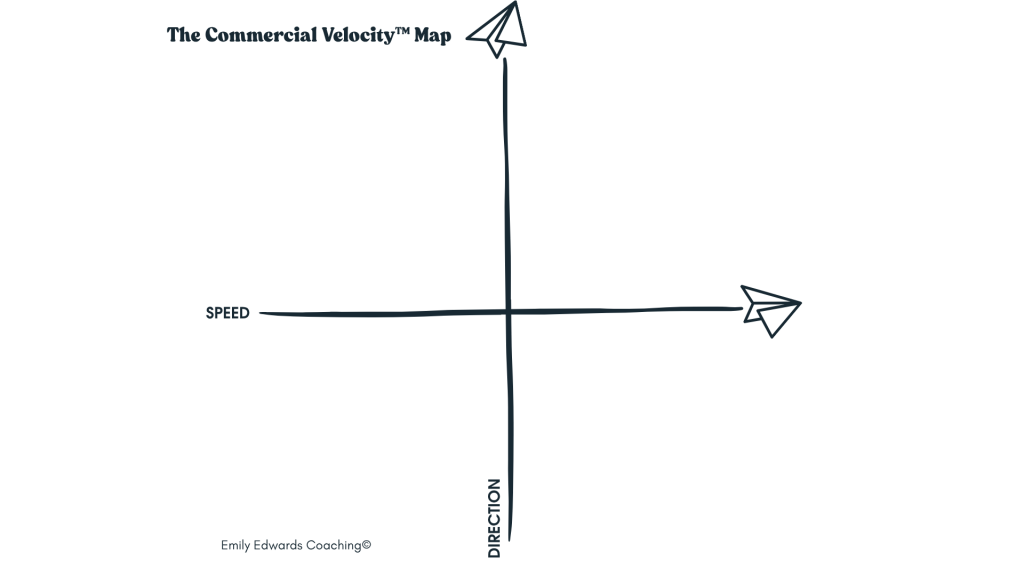
The first is direction. This is the clear vision of where your company or team is heading. That vision needs to be translated into a strategy that everyone understands, so people can make the right decisions about priorities and know exactly how their role contributes to the bigger picture.
Direction means having clarity around things like your ideal customer profile, your commercial guardrails, your marketing strategy and your buying strategy. It should be simple, straightforward and crystal clear about what you’re doing, and, just as importantly, what you’re NOT doing.
The second element is speed.
Speed is how efficiently your team executes and whether they are continuously improving in their roles. In our industry, that means hotel-specific knowledge too, speaking the Hotelexicon™, commercial skills, sales and account management capability, negotiation, communication and leadership. None of this comes naturally. People might have the right attitude and potential, but they still need support to get over the line.
When you combine clear direction with the skills to execute, that’s when teams build real Commercial Velocity™.
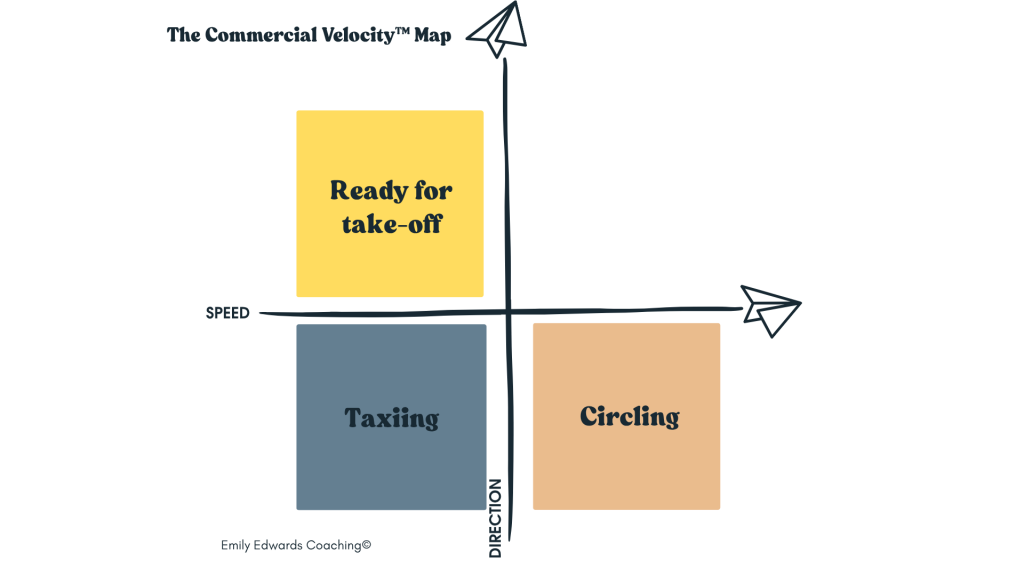
The four zones on the map
1. Taxiing – No clear direction and no speed
The bottom left of the map is the taxiing zone. Mind you, this doesn’t mean you’re standing still.
You’re working hard, expending energy and everyone is busy. But without a clear direction and without the skills to keep moving forward, you remain on the ground.
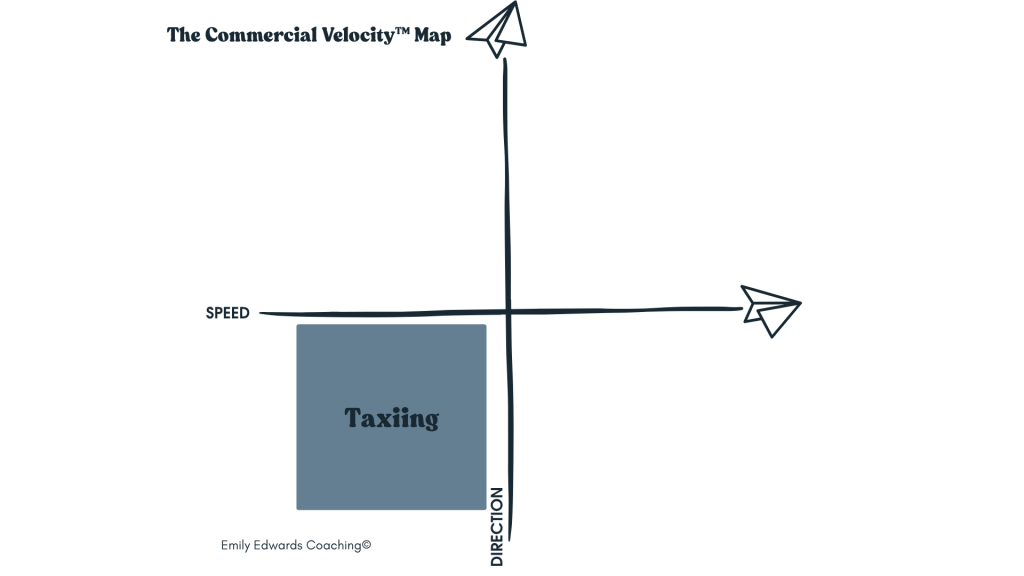
This is often where startups begin as they enter the industry, or where organisations have become dysfunctional, unsupportive or even toxic.
You might notice that different teams are working towards different priorities. Collaboration breaks down and decision-making becomes inconsistent. As a leader, your vision may feel perfectly clear in your own mind, but translating it throughout the business is where the challenge lies.
Commercially, you may struggle to communicate the value of your product to hotel buyers. Despite positive conversations, deals don’t close. Pipeline forecasting lacks discipline, sales hygiene slips and it’s difficult to predict when things will improve.
The solution isn’t simply working harder. It’s getting specific about where you’re going and building the capability you need to get there.
2. Circling – Plenty of speed but no clear direction
In the circling zone, you’ve got capable people with strong skills, but no clear or updated direction. This is where many established companies find themselves: doing what they’ve always done.
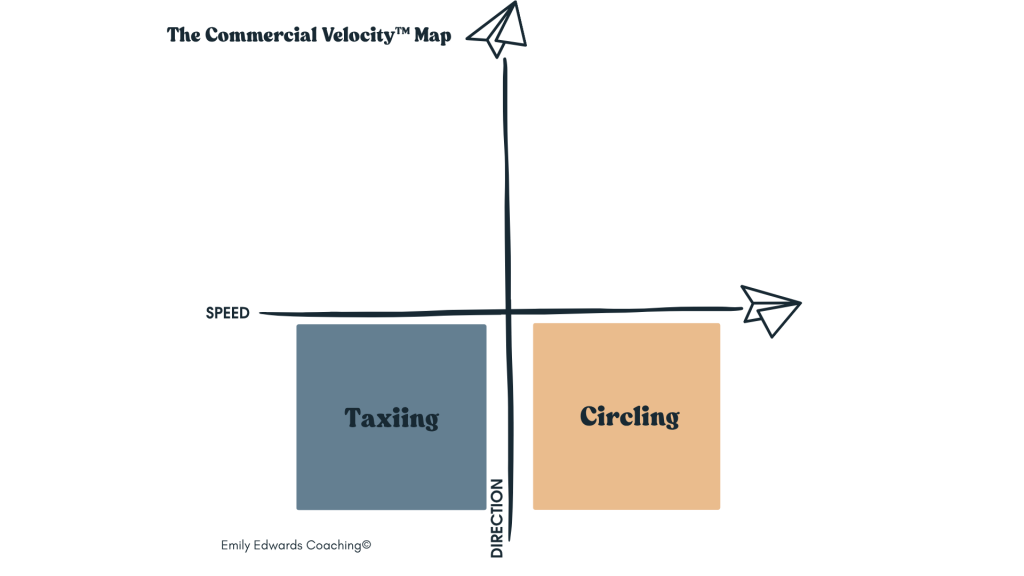
The team is busy. They’re renewing contracts, meeting customers, loading opportunities into the CRM and meeting all the old expectations of them. They’re working hard, but they’re not breaking new ground.
Sometimes the CEO has a bigger vision but struggles to translate it throughout the organisation. Sometimes the team stays firmly in its comfort zone because change feels uncomfortable.
The problem is simple: what got you here won’t get you to the next level.
As AI and technology rapidly transform our industry, we need to become both high-tech and high-touch. Teams need to adapt, learn new ways of selling and embrace new products and services.
Otherwise, they’re flying… but simply going round in circles.
3. Ready for Take-off – Strong direction but lacking the skills to execute
In the ready for take-off zone, you’ve got fantastic direction but not yet the capability to execute it.
The engines are running and everyone is excited, but the aircraft hasn’t left the runway.
This often happens when companies successfully enter hospitality from another sector. They have a compelling vision and clear reason to sell into hotels or travel, but underestimate the complexity of the industry.
Hotel buying cycles are long. Stakeholders are numerous. Decision-making is layered and nuanced.
Without the right commercial knowledge, Hotelexicon™, negotiation skills and account management capability, even the best strategy struggles to gain traction.
The team has the best intentions but is fumbling in the dark about how to execute.
Do they truly understand what keeps a hotel owner or revenue manager awake at night? Can they clearly communicate the value of their solution in a crowded marketplace?
If not, they’re spinning their wheels instead of taking off.
4. Commercial Velocity™ – Clear direction and high capability
This is where every organisation wants to be.
Commercial Velocity™ is where the company has a clear vision, communicates it simply and consistently so the whole team gets it, and equips people with the knowledge, skills and language they need to execute brilliantly.
The strategy isn’t static. It’s continually reviewed and adapted because the travel industry changes quickly and businesses need to respond just as fast.
Teams understand the destinations they manage, take ownership and know how to communicate effectively with each other and with their hotel or travel partners.
This creates trust, better commercial decision-making and stronger individual performance.
How do I get to Commercial Velocity™?
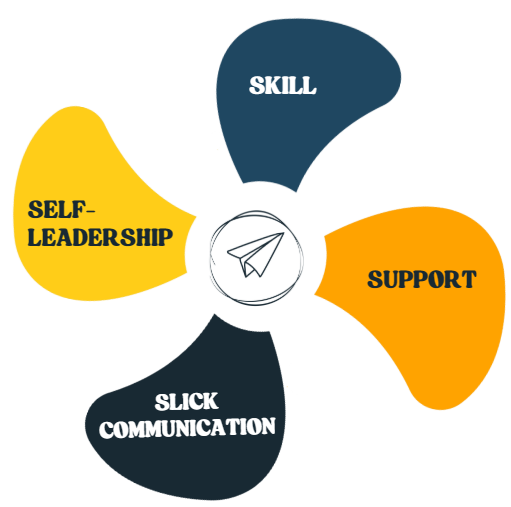
You can read more here about The Pilot Principle®, which are the four key pillars to building momentum in your own business and in your teams.
Essentially, you need a balanced combination of:
- Self-leadership
- Skill
- Support
- Slick communication
Together, these create the conditions for sustained commercial growth, where people become pilots rather than passengers.
Ready to discover where your team sits?
The first step towards Commercial Velocity™ is understanding where you are today.
Whether your team is taxiing, circling or ready for take-off, there is a clear path forward once you know what’s holding you back.
If you’d like to understand where your commercial team sits on the Commercial Velocity™ Map, and what practical steps will move you towards Commercial Velocity™, I’d love to help.
Book in a chat with me, and let’s explore how we can equip your team with the direction, skills and support they need to accelerate performance and achieve long-term commercial success.
Recent posts:
- Frictionmaxxing: Do We Need to Take a Step Back from AI to Leap Forwards?
- Balance these four things to be your best self
- The Commercial Velocity™ Map: Why Great Teams Get Stuck
- Founders who are full of beans and self-doubt need go-to-market planning too
- Soar past the Thriving Threshold, with these three steps to career happiness