
I hear the same frustrations time and again.
“I wish the people on my team would step up and take ownership.”
“I wish my boss would recognise the hard work I’m putting in.”
“I wish selling my own product felt as easy as keeping my boss happy in my corporate career.”
These sound like completely different problems, but to me they’re all different expressions of the same issue.
People give up control in all sorts of ways.
Self-doubt holds them back.
Perfectionism stops them sharing ideas.
Procrastination creates overwhelm.
They never spend time really understanding themselves, so they struggle to become the pilot of their own career.
On the other side, companies expect accountability without creating the environment that allows people to succeed. Teams become frustrated, communication breaks down and talented people disengage.
Without balance, progress feels slow, exhausting and inconsistent.
People often assume the answer is simply to work harder, shout louder or hire better people. In reality, sustainable momentum comes from balancing four interconnected components.
Whether you’re building a business from the ground up, moving up in your career, returning to work after a major life change or leading a team, one thing is true: momentum doesn’t happen by accident.
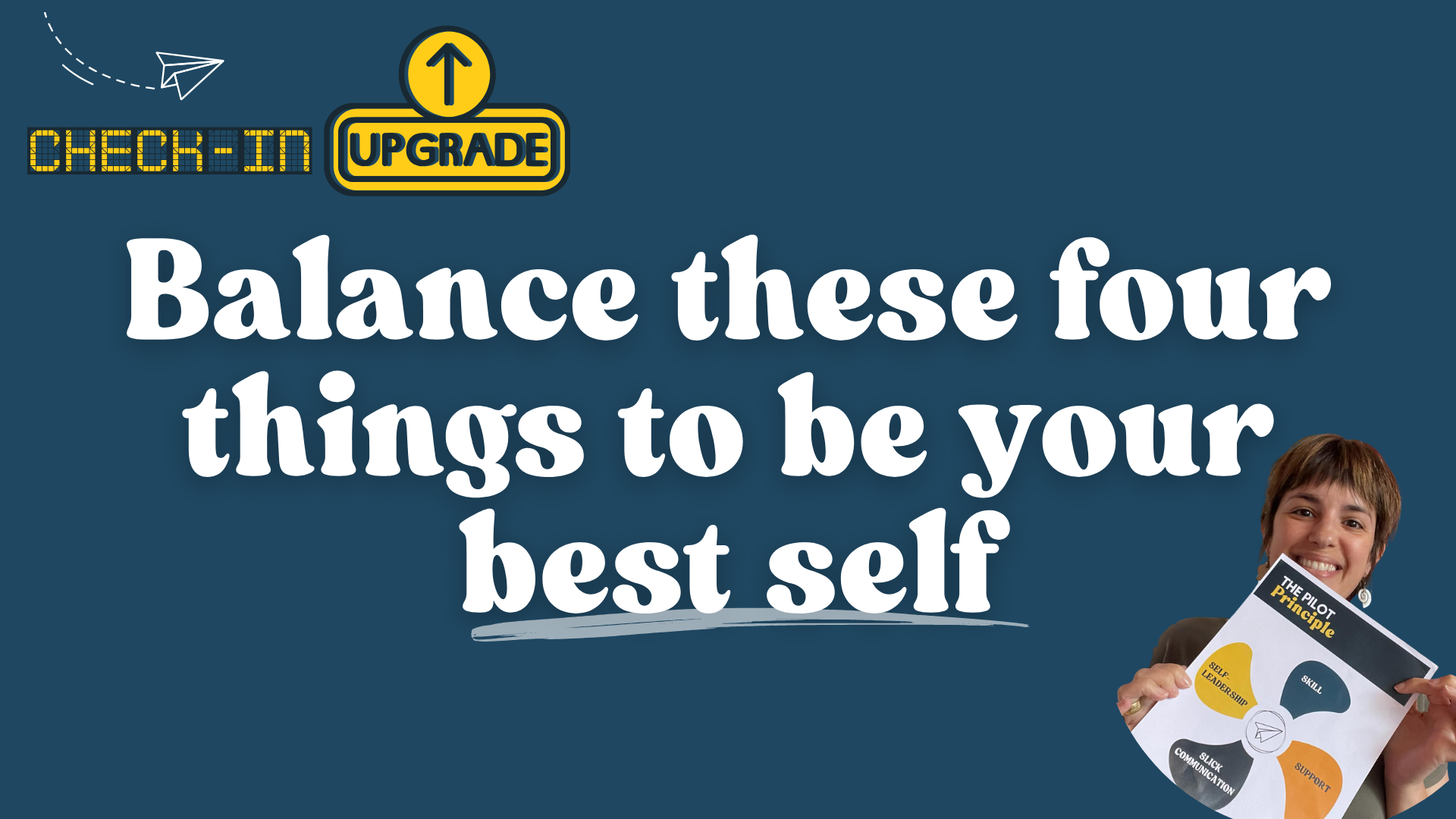
For a long time now, I’ve been talking about four key elements that need to be in balance to create sustainable momentum. The Pilot Principle™ evolved over months of scribbling ideas on bits of paper, refining concepts and seeing the same patterns appear with clients in completely different situations.
Then one day I had the absolute brainwave that tied it all together: it was a propeller.
Each blade represents one essential element, and when they are in balance you reach Commercial Velocity™: everyone taking ownership, moving in the same direction at a fast but sustainable pace, achieving commercial and personal goals together.
I’ve now trademarked The Pilot Principle® (Eek! Feels grown up!) because it’s the foundation of all the work I do with leaders, founders and teams.
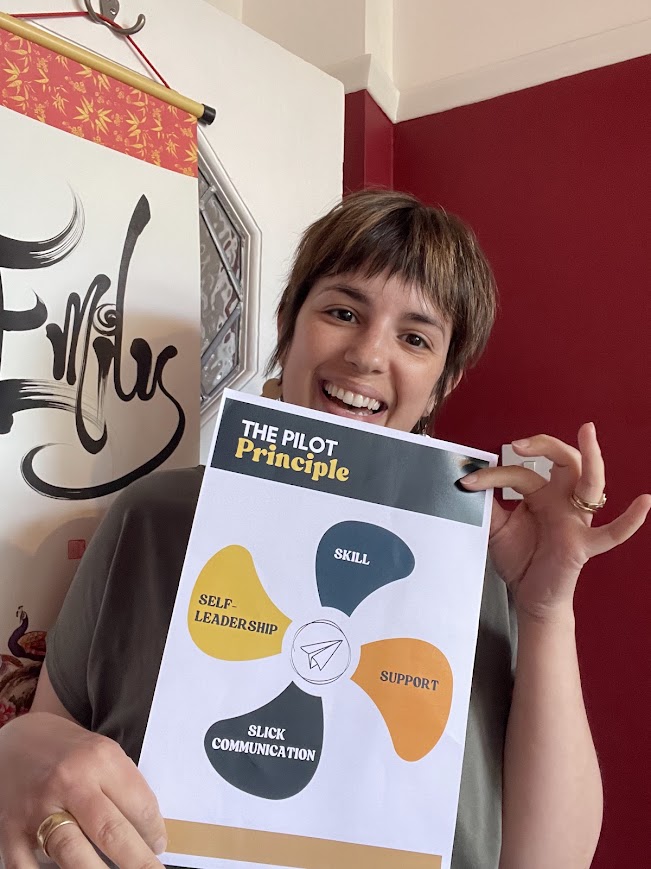
When all four blades are working together, you generate lift, direction and speed. But when one blade is out of balance, progress becomes much harder, no matter how talented you are. Things just feel a bit wonky, and sometimes you don’t know why.
The Pilot Principle® is relevant whether you’re:
- Building your own business
- Progressing in your corporate career
- Returning to work after a career break
- Leading individuals or teams
- Growing a business that wants to attract and retain high performers
Individuals need to take ownership of their career, while organisations need to create environments where people can thrive. When both sides work together, momentum accelerates.
Blade One: Self-Leadership
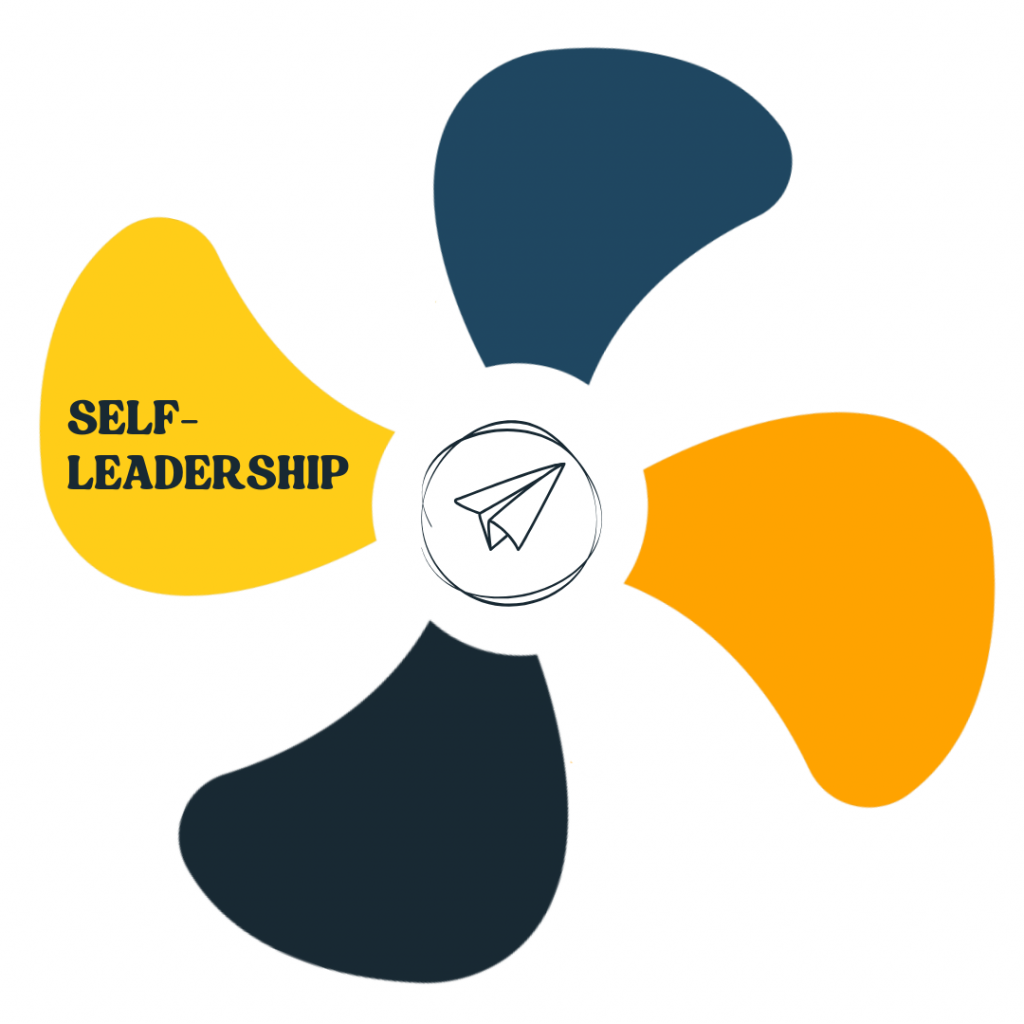
Everything starts with self-leadership.
Self-leadership means taking ownership, knowing where you want to go and understanding what you’re good at. It means accepting feedback, getting one percent better every day and becoming intentional about your development.
Many founders assume they’ve already mastered self-leadership simply because they’ve started a business. But entrepreneurship often requires a radical identity shift (I know, I’ve been through multiple!), and even experienced professionals can find themselves held back by perfectionism, overwhelm or imposter syndrome.
If you don’t know yourself, it’s very difficult to be the pilot of your own career.
Blade Two: Support
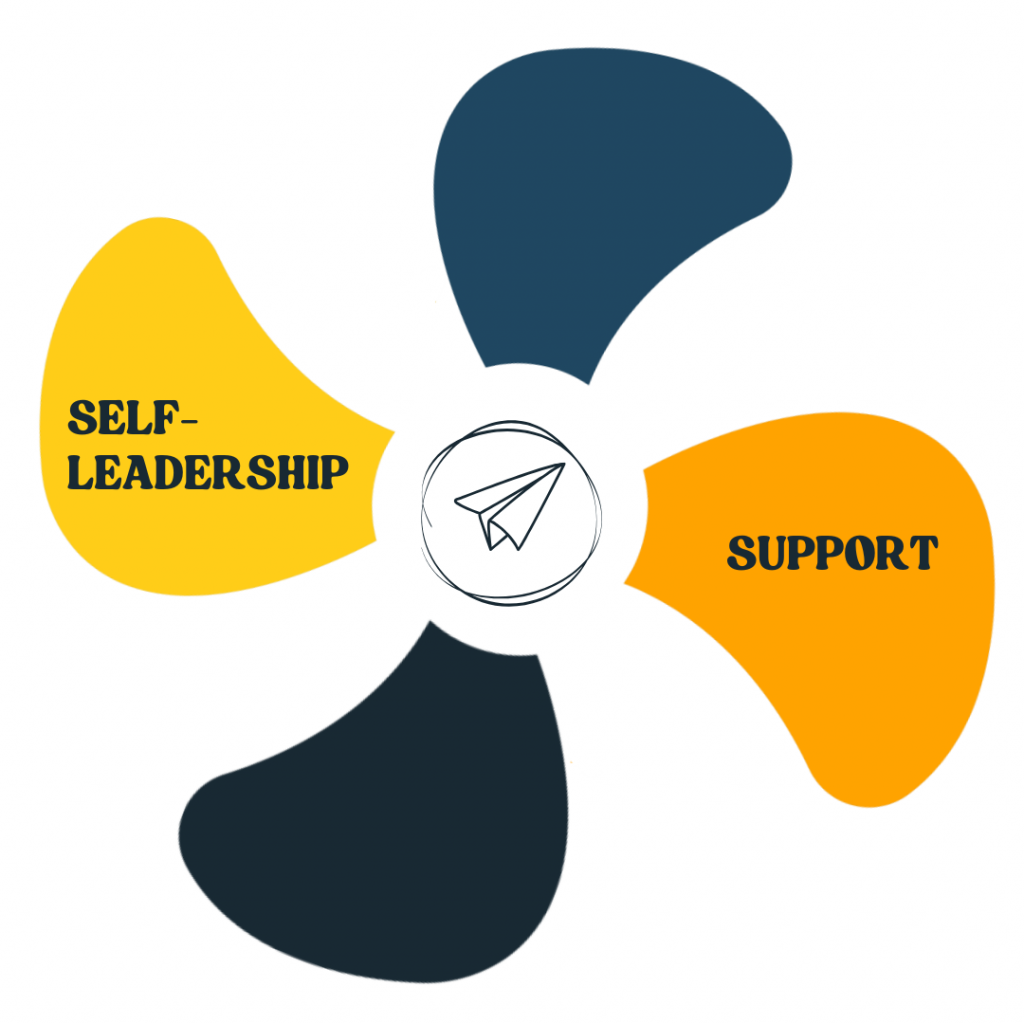
Directly opposite self-leadership sits support. There’s a reason for that.
Successful pilots don’t fly alone. They receive extensive training, rely on experienced mentors and work alongside highly skilled teams.
The same is true in business.
Companies need to create people-focused environments where it’s safe to learn, develop and grow. We can’t expect accountability from teams if we don’t provide the support that allows people to succeed.
For founders, support is just as important. You can’t carry every burden yourself. Building a strong network of mentors, peers and trusted advisers is essential if you want long-term success.
Blade Three: Skill
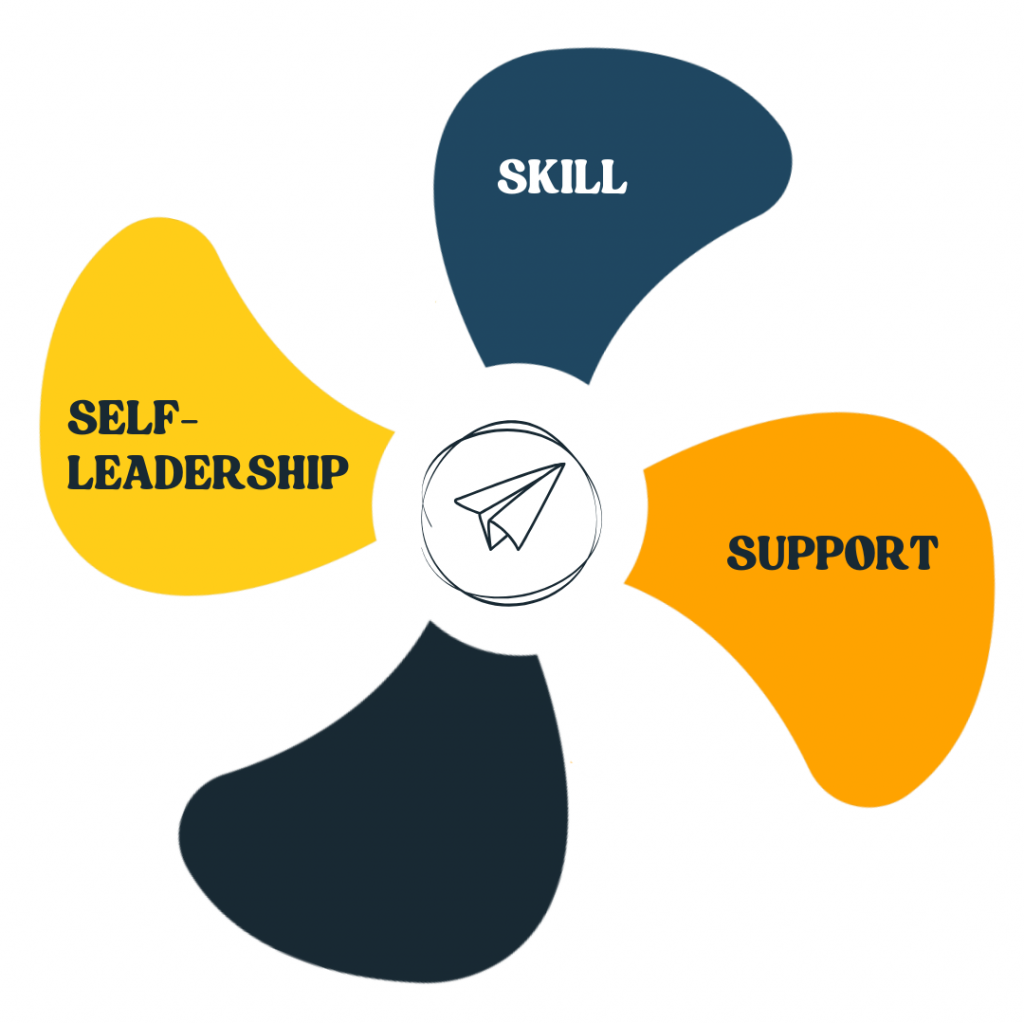
Skill is simply being good at your job.
That means developing commercial acumen, understanding your industry, mastering your systems and continually improving.
For individuals, it’s about becoming better at learning.
For organisations, it’s about giving people the opportunity to build new skills rather than expecting them to magically know everything.
Without skill, even the most motivated people become frustrated because they want to do good work but don’t yet have the tools to achieve it.
Blade Four: Slick Communication
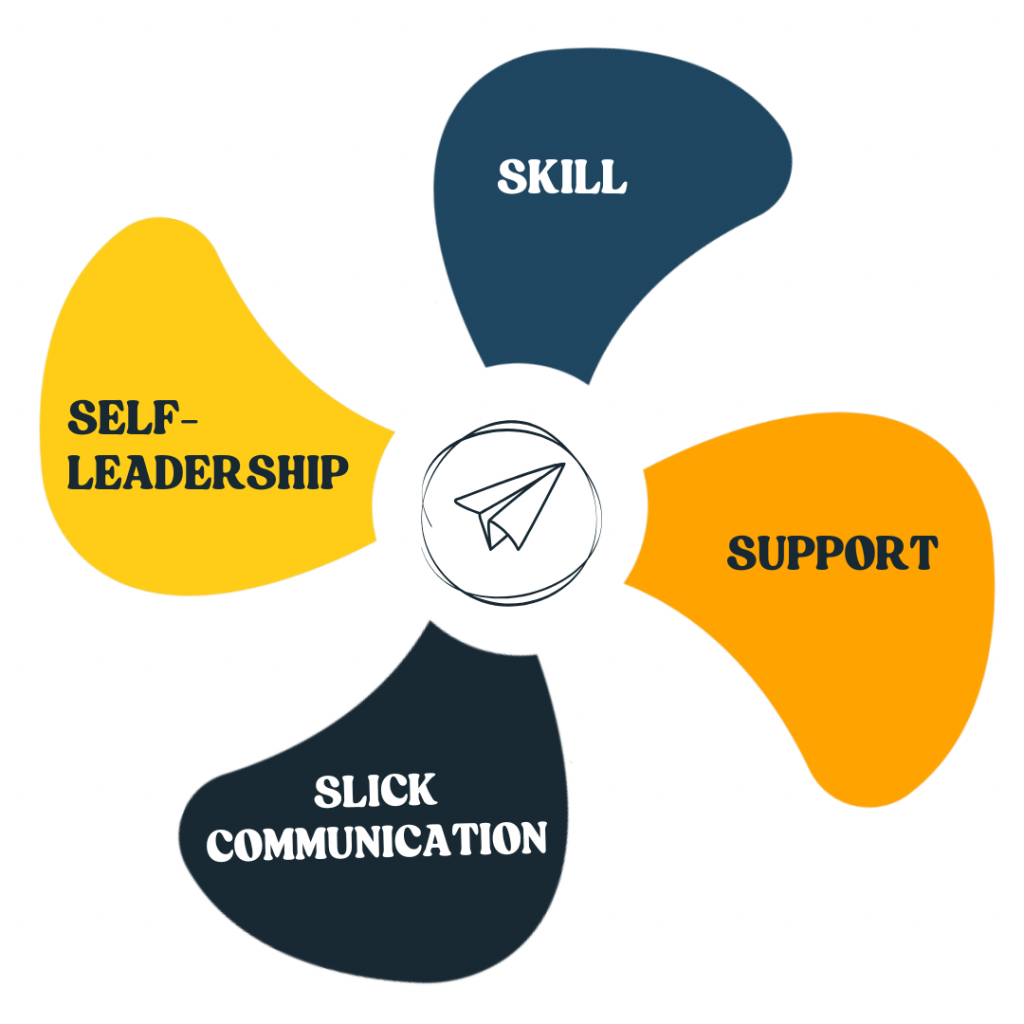
The fourth blade is slick communication: the glue that holds everything together.
No more misunderstandings.
No more fluffy feedback.
No more wondering whether you could have said something differently.
Better communication strengthens leadership, improves collaboration and helps founders sell naturally without sounding scripted. It helps teams understand one another, clients feel heard and organisations move together towards the same destination.
When people communicate clearly and directly, trust grows.
What happens when the blades work together?
The real power of The Pilot Principle® is in how they interact.
Self-leadership + Skill = Individual achievement
When skilled people take ownership of their own development, you see strong individual performance. People make sound commercial decisions, sign great deals, move quickly and consistently deliver results.
But if support is missing, those high performers often become underappreciated, overworked or fed up. And without slick communication, they struggle to bring others with them on the journey. They may achieve personally, but eventually they’ll start to falter because they can’t create momentum beyond themselves.
Skill + Support = A growth environment
When people have the opportunity to develop their skills and feel genuinely supported, you create a culture of continuous improvement. Teams become more confident, learn faster and develop stronger commercial capability. This is where companies can gain a real long-term advantage over others.
But if self-leadership is missing, people can become overly dependent on their managers and need spoonfeeding. They wait to be told what to do instead of taking initiative. The environment is supportive, but the accountability isn’t there, so progress slows.
Support + Slick Communication = A clear destination
When genuine care is combined with direct, honest communication, trust grows. People know where they stand, difficult conversations happen earlier, and teams move towards the same destination with far greater clarity.
However, if people don’t have the skills to do their jobs well, or the self-leadership to take ownership, the teams will be frustrated. Support alone can’t compensate for capability or accountability, and most people do want to do their jobs well!
Slick Communication + Self-leadership = A purposeful journey
When individuals know where they want to go and communicate effectively with those around them, career conversations become easier, collaboration improves and people naturally influence others.
But without the right support and opportunities to develop new skills, even the most self-driven people will end up fed up and frustrated.
The magic happens when all four blades are in balance. Self-leadership, support, skill and slick communication work together to create what I call Commercial Velocity™: everyone taking ownership, moving in the same direction at a fast but sustainable pace, achieving commercial and personal goals together.
What this looks like in practice
With Founders
One of my recent clients had just left corporate life to launch his own business. He told me, “I’ve got a great product, but selling it feels really icky.”
We worked across all four blades of the propeller.
When we focussed on self-leadership he shifted from feeling like he was asking people for a favour to believing his product was the prize. We strengthened his commercial skills by building his sales process and critical success factors (how many contacts does he need to eventually sign a deal). I introduced him to potential partners as part of his support network, and together we developed a communication style that felt authentic rather than pitch-slappy.
Within a month, he had completely transformed the way he showed up, networked and followed up with potential clients.
With Leaders
Another client, a Chief Marketing Officer in a large global travel technology company, wanted to rediscover his passion and purpose and become a better leader. First we explored the procrastination that was holding him back (I’m sure many readers will resonate with that!), then we redesigned an important leadership event by working backwards from the experience he wanted his team to have.
Related to Support and Slick communication we did one of my favourite exercises, which is putting yourself in someone else’s shoes by literally moving from one chair to another. This brought up some incredible insights as to why those interactions with a colleague might have felt challenging to him, and how he could show up differently to make it more enjoyable and get what he needs out of those conversations. By developing self-leadership, skill, support and communication together, he was able to reconnect with both his purpose and his team.
With Teams
I delivered leadership and communication training for the operations supervisors at AC Group, a UK-based DMC. We began with self-leadership using Stephen Covey’s circles of control, influence and concern, before developing delegation skills, communication frameworks and DISC behavioural profiling (by far the favourite module). Perhaps the biggest shift came through support, as the team created space to help one another emotionally and practically, strengthening relationships well beyond the training itself.
The COO said: “Emily designed a tailored development programme for our supervisors, covering key topics such as Managing Upwards, Delegation, and DISC profiling. These areas proved invaluable to the growth and development of our high-potential supervisors, who represent the next generation of managers within our organisation.
As a company, we recognise our responsibility to support their professional development and career progression. The positive impact is already evident in their confidence, capability, and daily performance.
Emily’s positive, approachable, and engaging demeanour made every session enjoyable and easy to absorb. She created an environment where participants felt comfortable contributing, learning, and applying new skills. I would highly recommend Emily to any organisation looking to invest in the development of its future leaders.”
Keep your propeller balanced, always
The Pilot Principle® isn’t something you complete once and tick off the list.
As the propeller creates momentum, you continue levelling up. It’s like climbing a spiral staircase. Every new level demands a stronger version of yourself.
I love the phrase, “Another level, another devil.”
The work is never really finished, and that’s what growth looks like.
If your propeller feels a bit wonky, if momentum has stalled or you know one of these four blades needs strengthening, I’d love to help.
Arrange a call with me, and let’s explore how we can rebalance your propeller, build Commercial Velocity™ and help you or your team start flying again.
Recent posts:
- Frictionmaxxing: Do We Need to Take a Step Back from AI to Leap Forwards?
- Balance these four things to be your best self
- The Commercial Velocity™ Map: Why Great Teams Get Stuck
- Founders who are full of beans and self-doubt need go-to-market planning too
- Soar past the Thriving Threshold, with these three steps to career happiness